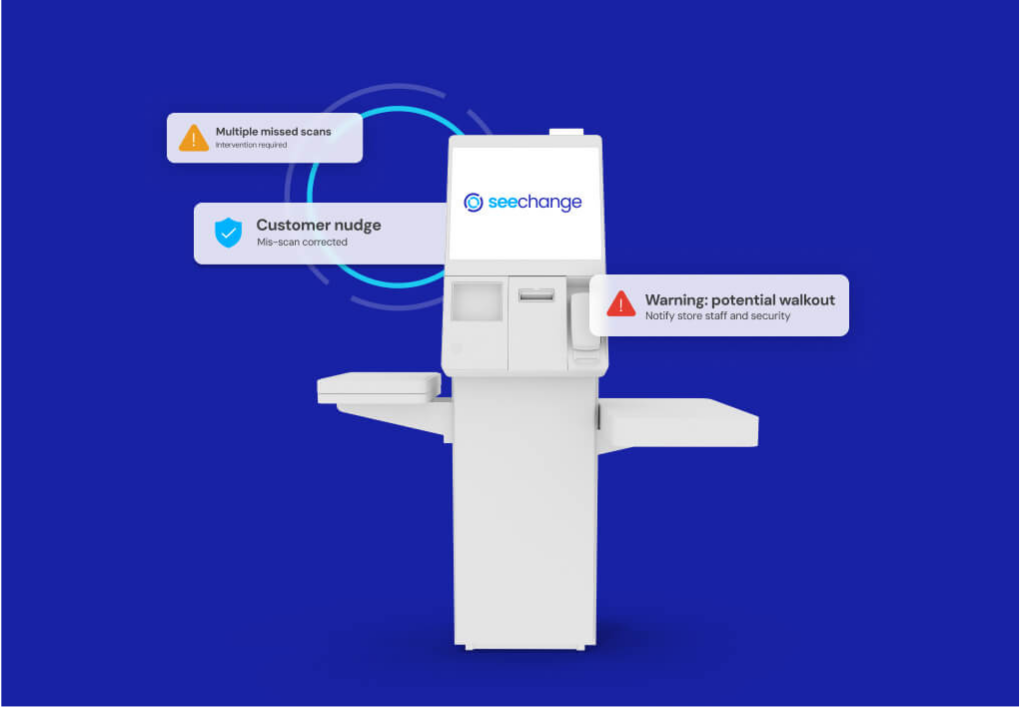
Real-world physical AI deployments: Why the hard part starts after the demo
08th October 2026
Vision AI gives machines the ability to see and understand the world around them. Physical AI takes the next step, using that understanding to inform or trigger action in real-world environments.
In 10 questions, SeeChange CEO Jason Souloglou explores this evolution, explaining why the hard part starts after the demo and why people, operations and responsible deployment matter as much as the technology itself.

Q1: What inspired SeeChange, and why do you believe in Physical AI?
Jason: The idea came from a simple observation. There are billions of cameras and sensors deployed across the world, yet they have no understanding of the consequences of what they’re seeing and sensing.
The question I kept coming back to was: what if we could give physical sensors and especially cameras the ability to understand what’s happening around them in real time and take action?
That idea became the foundation of SeeChange.
The ambition was never just to build a product. It was to help create a future where Physical AI becomes an accessible, scalable technology that can be applied across countless industries to solve real-world problems.
If we look at the history of software, we’ve gone from punch cards to AI writing code.
The tools, platforms and infrastructure evolved to the point where software became accessible to almost everyone. Today, an eight-year-old can vibe-code surprisingly sophisticated software applications in their bedroom. I want Physical AI to follow a similar path.
When Vision AI becomes easier to develop, deploy and scale, we’ll see an explosion of innovation. People will find use cases none of us have imagined yet.
That’s when technology can start making a real difference at scale and raise the level of the planet.
Q2: Why does the hard part of deploying real-time AI begin after the demo?
Jason: Reality and reliability.
It’s one thing to make a model work in a controlled environment. It’s another thing entirely to make it work reliably in the real world.
One of our first use cases was detecting liquid spills in supermarkets to reduce slip-and-trip hazards.
The model looked fantastic in testing. Then we deployed it.
We discovered that floor stickers and dried up stains triggered false positives. Even more surprisingly, reflections from shiny shoes sometimes looked like transient liquid spills flashing across the system….
Those are the kind of edge cases you only discover when technology meets reality. The real world is messy, unpredictable, and endlessly variable.
Q3: Why is retail such a challenging environment for real-time AI?
Jason: Retail is one of the most unstructured environments you can imagine.
At self-checkout, people shop alone, as couples or as families. They stand close to other shoppers. They hold items in different ways. They stack products. They move products between baskets, bags and pockets.
The AI needs to understand which people belong to a transaction, which products belong to which shopper and what actions are taking place.
You can’t possibly train a separate model for every scenario.
The real challenge is not whether AI can work once in a demo. It’s whether it can work reliably, responsibly and at scale.
That’s why we developed an object-based architecture that focuses on understanding individual objects, their relationships, and their behaviors.
This gives us the flexibility to scale as new situations emerge without having to redesign the system from scratch.
Q4: How does an object-based architecture help Physical AI adapt to real-world complexity?
Jason: Instead of trying to identify every retail scenario individually, we break the environment down into objects and relationships.
Think of it like object-oriented programming.
Products, baskets, bags, checkout stations and people all become objects with attributes, capabilities and relationships.
That makes the system much more modular and adaptable. If a retailer introduces a new process or a new type of product interaction, the underlying architecture can absorb that change much more efficiently, often not having to train any new models.
The real world is constantly evolving. Your AI architecture needs to evolve with it.
Q5: Why are people and operational workflows as important as the technology?
Jason: Technology exists to support and empower people, not replace them.
At self-checkout. The solution must work for shoppers, store colleagues, and retailers simultaneously.
If shoppers are interrupted every few seconds, the experience becomes frustrating. If staff are overwhelmed with alerts and interventions, adoption fails.
Successful Physical AI deployments aren’t just about detection. They’re about creating the right interaction between people, technology and an improved outcome.
Q6: What role does real-world data play in improving performance and challenging assumptions?
Jason: It’s everything.
You can model and simulate as much as you like, but until you’re seeing real-world data, you don’t truly know what’s happening.
One retailer was convinced that students were responsible for most product loss.
When we deployed the technology and analyzed the data, it turned out that much of the loss was working professionals stealing sushi! That’s one of the most powerful aspects of computer vision.
Vision AI provides objective insight into what is actually happening. Sometimes the results surprise everyone.
Q7: With AI models from OpenAI, Anthropic and others becoming increasingly powerful, won’t that eventually make SeeChange obsolete?
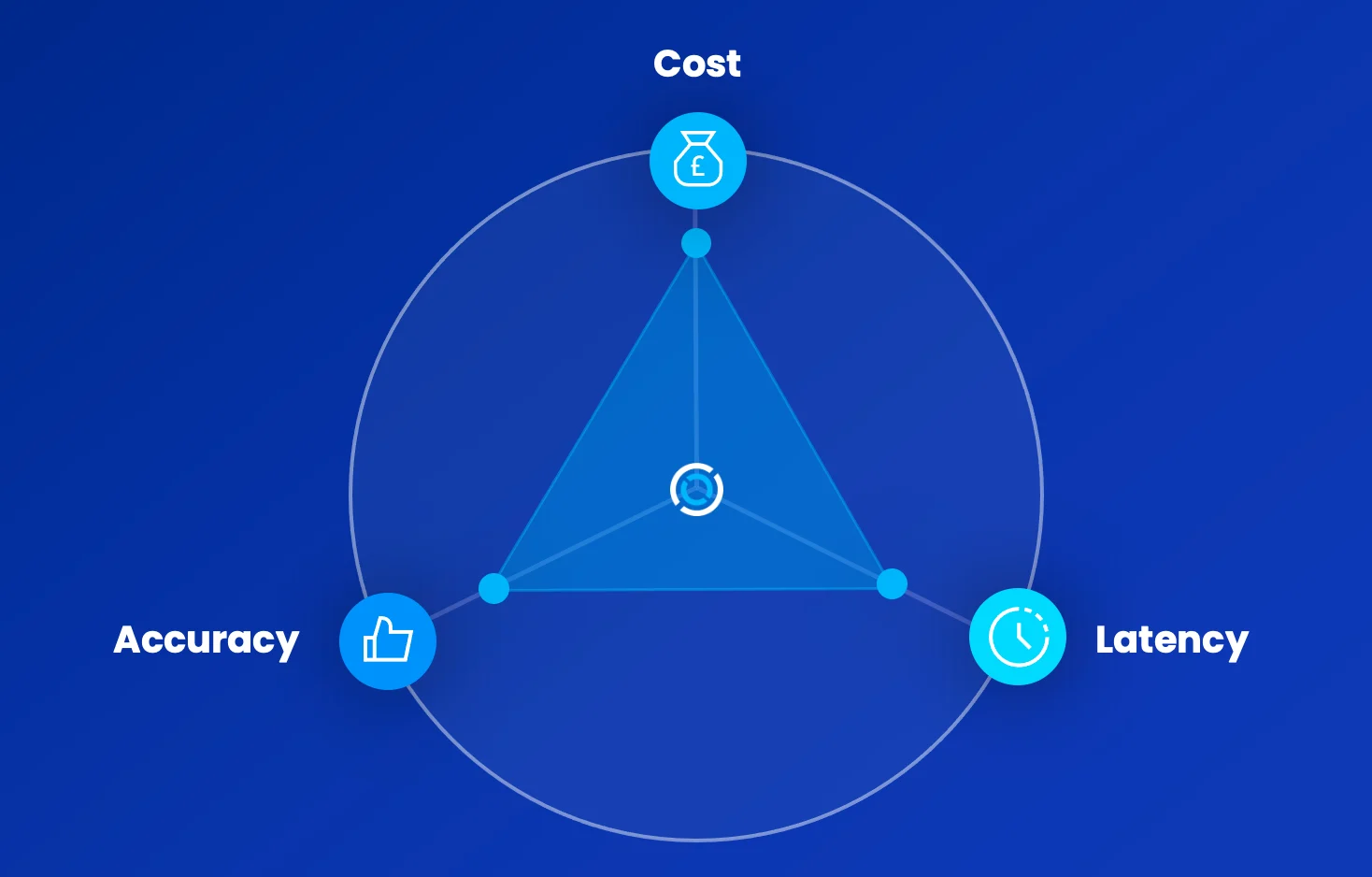
Jason: In Physical AI, solutions need to balance what I call the vision AI deployment triangle:
- Accuracy
- Latency
- Cost
If you have huge models, unlimited computing power and unlimited time, almost anything is possible.
But in the real world, a business needs answers quickly. It needs them accurately. And it needs them at a cost that can be deployed across tens of thousands of endpoints in hundreds of locations. Otherwise there’s no business case.
Balancing this equation is extremely difficult.
That’s where much of the innovation happens.
Q8: Why does deployment flexibility—from edge to cloud—matter?
Jason: Because there isn’t a one-size-fits-all deployment model.
Some customers want processing on edge devices. Others want processing on store servers. Others want to send it to a data centre and others want to process inference in the cloud. And some want all the above for different circumstances within the same deployment!
In some environments, data cannot leave the premises for regulatory or operational reasons.
Different workloads need different architectures.
That’s why flexibility matters.
Q9: How should industry approach privacy, ethics and the wider risks of AI?
Jason: AI is powerful, and that power requires humanity to behave responsibly.
For example, we work with organizations that need to identify security threats within a retail environment while also respecting privacy regulations.
In many cases, that means deploying solutions that use anonymous tracking rather than full biometric recognition.
The industry must build systems that deliver business value while respecting people’s rights.
We shouldn’t pretend there aren’t risks. There are. The important thing is that we acknowledge those risks and build responsibly.
Any transformative technology carries risk. The responsible position isn’t to either abandon progress or to ignore the risks, but to acknowledge the risks and manage progress responsibly. And sometimes that means putting Humanity before profit.
History is full of technologies that can be used for incredible good or incredible harm.
AI is no different.
My view is that we need mature conversations about how these systems are developed, governed and deployed. The potential benefits are extraordinary, but only if we approach them responsibly.
Q10: Where do you see Physical AI creating value in the future?
Jason: Almost everywhere.
We’ve seen applications in gyms, where AI can identify membership-sharing behaviour.
We’ve seen it in quick-service restaurants, validating order accuracy before food leaves the kitchen.
We’ve seen it in casinos, where detecting sophisticated cheating techniques can be extraordinarily difficult for humans but much easier for AI.
The opportunities are enormous. What’s exciting is that we’re still early on the journey. I want to see Physical AI become as common and accessible as software is today. We’re not there yet. There’s still a long way to go. The technology, the infrastructure, the deployment models and the tools all need to continue evolving.
No single company will build that future alone.
It will require collaboration across industries, research institutions, regulators, hardware providers, software developers and customers.
But if we get it right, Physical AI and the ability to respond in real-time has the potential to make environments safer, smarter, more responsive, and reduce friction, in ways we’re only beginning to understand.
And, pardon the pun, it will be a sea change to the quality of life on this planet and SeeChange will be one of the driving forces behind it.