How AI detects and resolves self-checkout missed scans
29th April 2026
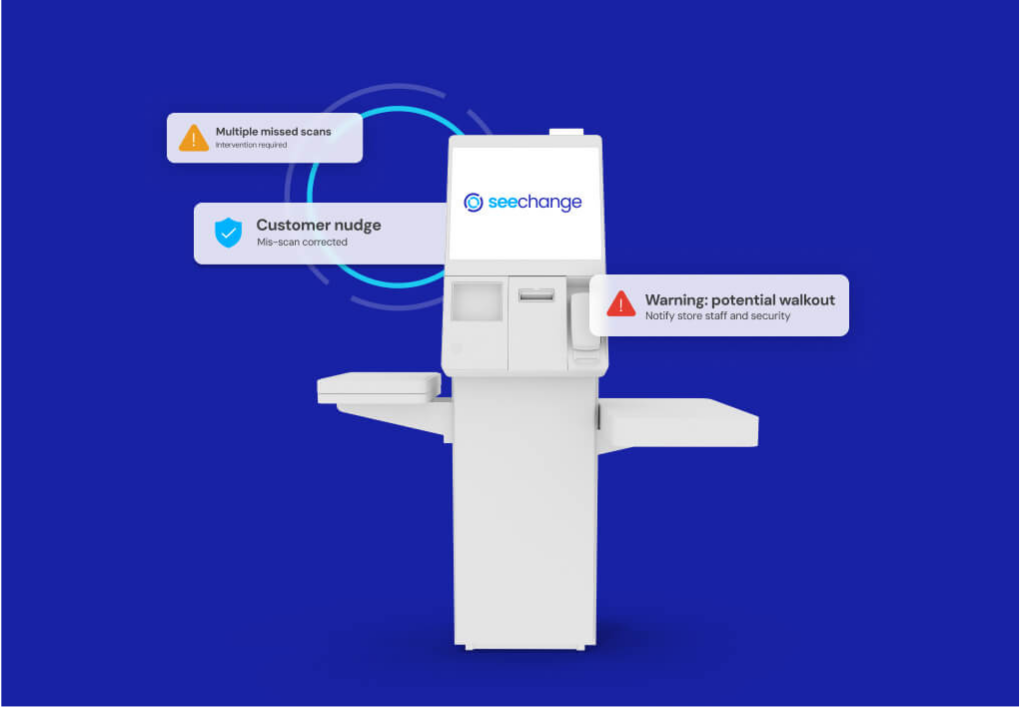
The single most common shrink event at self-checkout is an item placed in the bagging area without being scanned. It’s a missed scan, skip scan, or it can be deliberate. The advantage of detecting missed scans visually is that the Vision AI responds to what happened at the checkout, then lets the retailer decide how firmly to act.
A nudge that lets honest shoppers put it right
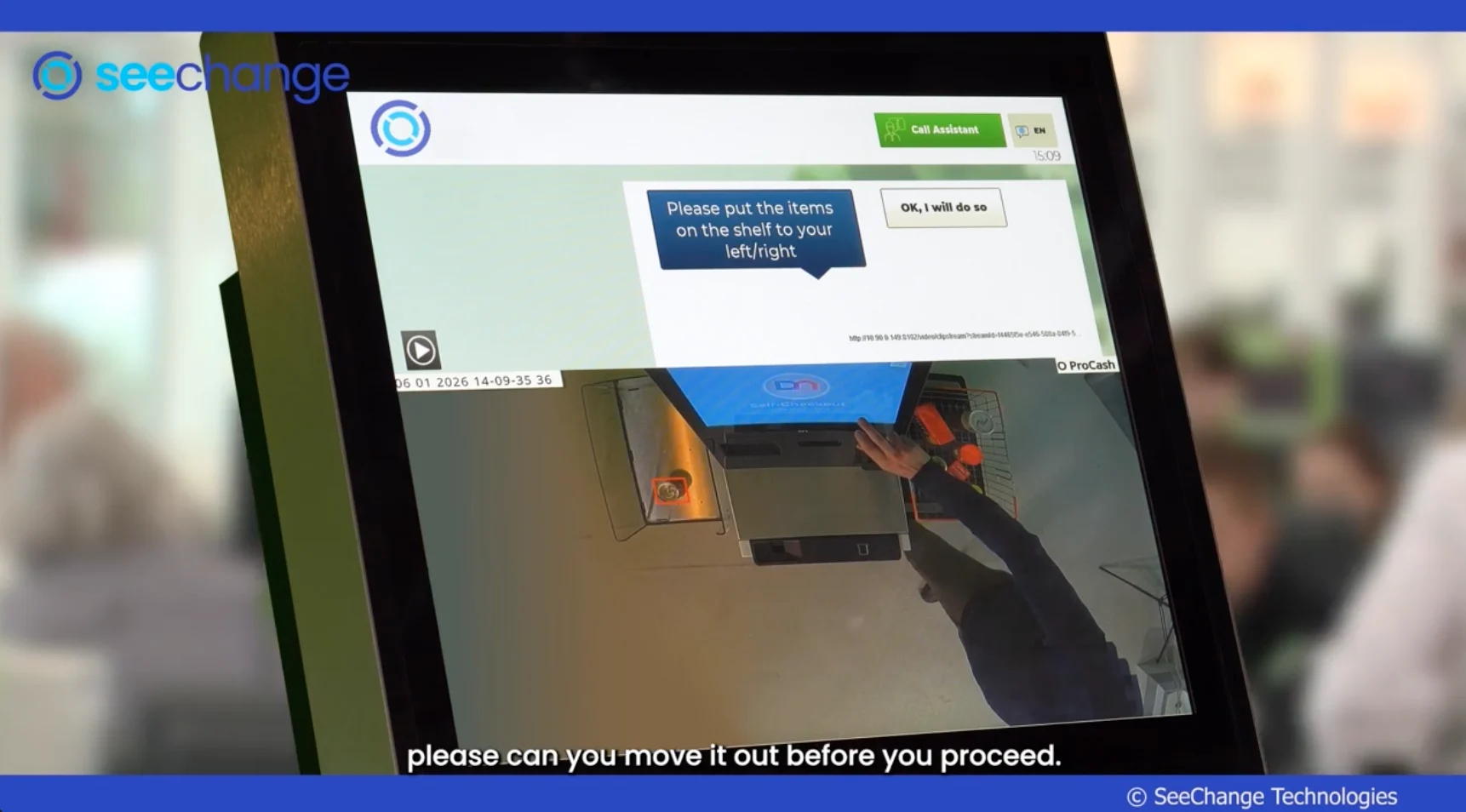
Vision AI sees an item bagged without a scan, it doesn’t lock down the checkout immediately. It nudges the shopper directly, showing them an annotated clip of the moment – the item in question marked with a red box and a simple prompt: did you scan the last item? The shopper answers yes or no, and the retailer sets what each answer triggers. This gives an honest customer the benefit of the doubt and the transaction carries on. The point is to let people self-correct before anyone is pulled into it.
Escalation when the pattern repeats
The response changes with the behavior. A second missed scan in the same transaction can move from a nudge to a block: the checkout locks and a colleague is called over. Crucially, that colleague arrives already informed – the same evidence clip is available to them on the checkout, on a dashboard, or on a palm device, wherever they need it. They can see exactly what happened before they reach the lane, so the intervention is quick, calm, and resolved without a guessing game in front of the customer.
A rules engine the retailer controls
SeeChange provides the rules engine. The retailer decides how it behaves. You set the thresholds, choose which events nudge, which block, and which trigger another response, then adjust as you learn what works across your stores. The result is a nudge-or-block decision that reflects your risk appetite, not a fixed setting imposed on you. Our AI rules engine covers how that logic is built and tuned.
Knowing what to ignore
A self-checkout that flags everything creates as much friction as the shrink it prevents so the harder problem is precision. Because SeeChange detects what’s happening visually rather than SKU-matching or weighing the basket, it can tell ordinary behavior apart from a real event. Drop a phone into the till by accident and nothing happens – the checkout knows a phone isn’t a product. Take two identical items and scan one of them twice, then bag both, and there’s no nudge: it recognizes the products as the same and lets it go. That’s the difference between catching theft and catching honest customers in a net of false alarms.
Why detection sees what the scanner can’t
The scanner records one thing: whether an item was scanned. It captures nothing about what actually happened at the lane. So a self-checkout built around a scanner alone cannot tell a deliberate skip from a genuine mistake, a slip of the hand, or a moment of distraction. It can only flag the absence and escalate, which is why first-generation self-checkout security tends to choose between letting events pass and frustrating honest shoppers.
By looking at what actually happened at the checkout, Vision AI can recognize a missed scan, judge whether it’s a one-off or a pattern, and respond in proportion without leaning on weight or SKU signals. How that works is explained in the computer vision self-checkout section of our self-checkout security guide, covering what vision AI can see that traditional systems can’t, and how it holds up across different checkout configurations.
For the complete picture of how SeeChange protects the self-checkout lane find out more on the AI Self-Checkout solution or speak to the team.