AI self-checkout benefits: elevating the role of store teams
14th March 2025
Why the next wave of self-checkout is human-led, not human-free
Self-checkout has become the default for grocery retail. In stores where it’s deployed, more than half of transactions now pass through it.
That shift has fundamentally changed the store. Not just how customers check out, but how employees work.
First-generation self-checkouts were built for speed. But they also quietly expanded the role of store teams. Employees became part cashier, part technician, and part loss prevention. Managing errors, resolving issues, and stepping into moments of friction.
Now, the model is changing again.
AI-powered self-checkout isn’t just improving throughput. It is redefining how work gets done in store.
The reality: self-checkout increased complexity, not just efficiency
Traditional thinking framed self-checkout as a labour-saving tool. The reality has been more nuanced. ECR’s research shows what that pressure costs. Left unmanaged, self-checkout pushes loss up by an average of 22%, and every extra 10,000 transactions brings roughly 1,000 more help calls.
At scale, self-checkout doesn’t remove work. It redistributes it. And without the right tools, it concentrates that work on fewer colleagues – the ones left walking between flashing SCO lanes on a Saturday afternoon.
Reframing automation: from replacement to workforce strategy
Across industries, the conversation about automation has moved on from replacement. Increasingly it’s seen as a way to stabilize the workforce, strip out repetitive high-friction tasks, and free people for work that needs judgement. In retail specifically, AI is becoming a form of “digital labor” taking on the routine so human teams can focus on service, judgement and experience.
Self-checkout is where that shift is most visible.
Where AI-powered self-checkout changes the model
The difference with AI at the lane is simple. It doesn’t just process transactions it understands what’s happening. And that changes the employee’s day in three ways.
From intervention-driven to self-correcting
Most self-checkout loss isn’t theft; it’s missed scans and simple mistakes, somewhere between 1% and 4.8% of transactions.
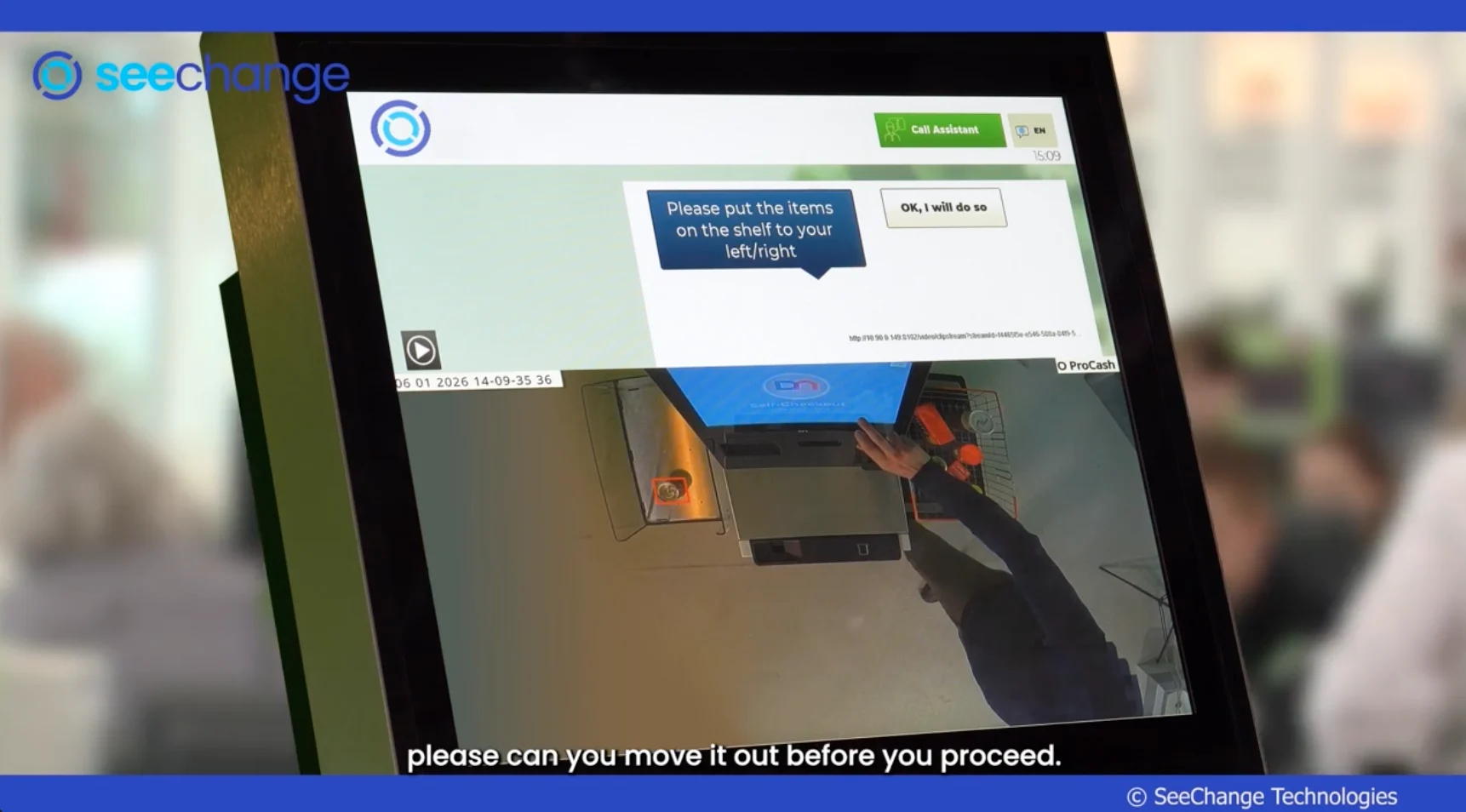
Self-checkout AI watches for discrepancies. When something looks off, it nudges the shopper in real time and around 80% of customers put it right themselves when prompted. Only a small share of transactions, roughly 3–10%, ever trigger an alert.
For employees, that’s the difference between policing every lane and stepping in only where it genuinely counts. Our self-checkout security guide sets out how that discipline works end to end.
The result:
- Fewer manual interventions
- Less friction between staff and customers
- Faster resolution without escalation
From reactive to supported store teams
Instead of reacting to problems after they’ve happened, colleagues are guided by real-time visibility and backed by8 video and image-based evidence, so they can prioritize the lanes where intervention matters. The job shifts from policing behaviour to enabling flow for shoppers and transactions alike.
From low-value tasks to higher-value roles
As repetitive intervention reduces, staff capacity is unlocked. That creates space for the work that only people can do well: helping customers who genuinely need it, keeping stock on shelves, and coaching shoppers through the lanes so adoption sticks.
This aligns with a broader trend: automation enables workers to focus on higher-value activities, not removing them entirely.
The impact on store performance and the team
When AI, self-checkout and human oversight work together, the equation balances. Transactions are faster and friction drops; throughput improves while intervention rates fall. Missed scans and non-scan behaviors are caught earlier, so walkaways and shrink exposure come down and inventory accuracy holds up.
But the outcome that matters most on the shop floor is the one that’s hardest to put on a dashboard. Fewer confrontational interactions mean lower stress. Better use of time means employees spend their shift helping rather than firefighting. And that, in turn, tends to show up in job satisfaction and retention.
Real deployments showcase this: at Intermarché, shrink fell from around 3% to below 1%, with interventions roughly halved and similar discipline is in place at Edeka. The losses attributable to self-checkout are manageable when the right interventions sit behind the lanes.
- Our self-checkout security guide sets out how that discipline works end to end, from catching missed scans to nudging shoppers to self-correct.
- Explore SeeChange’s AI self-checkout software and how retailers put it into practice on the lanes they already run.