The Future of Self-Checkout: From friction point to intelligence engine
09th February 2023
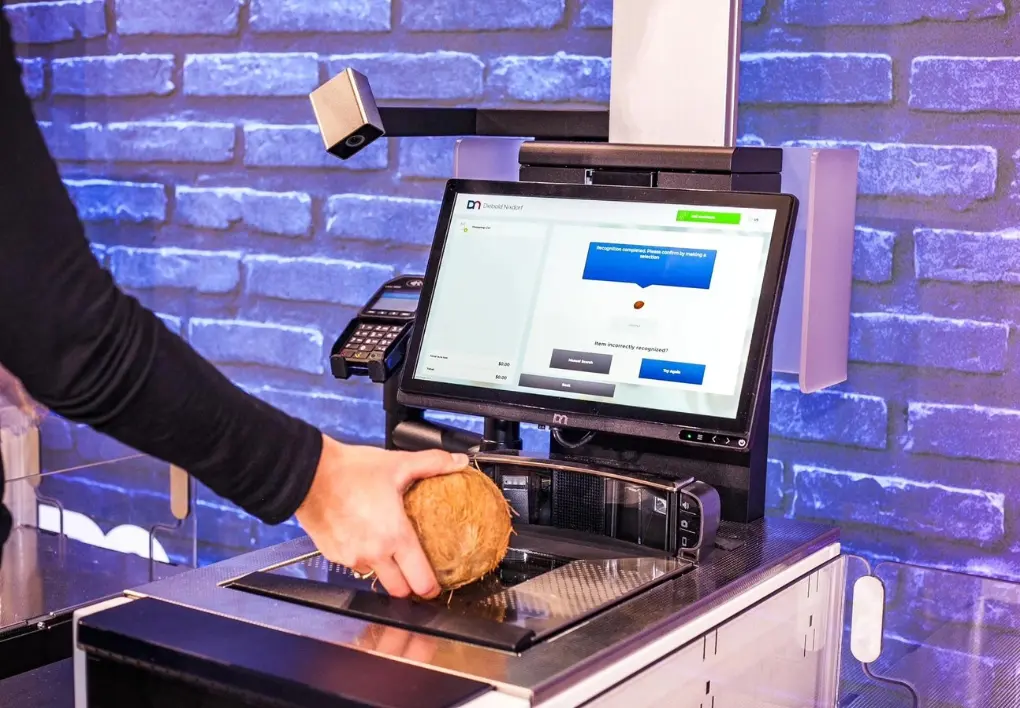
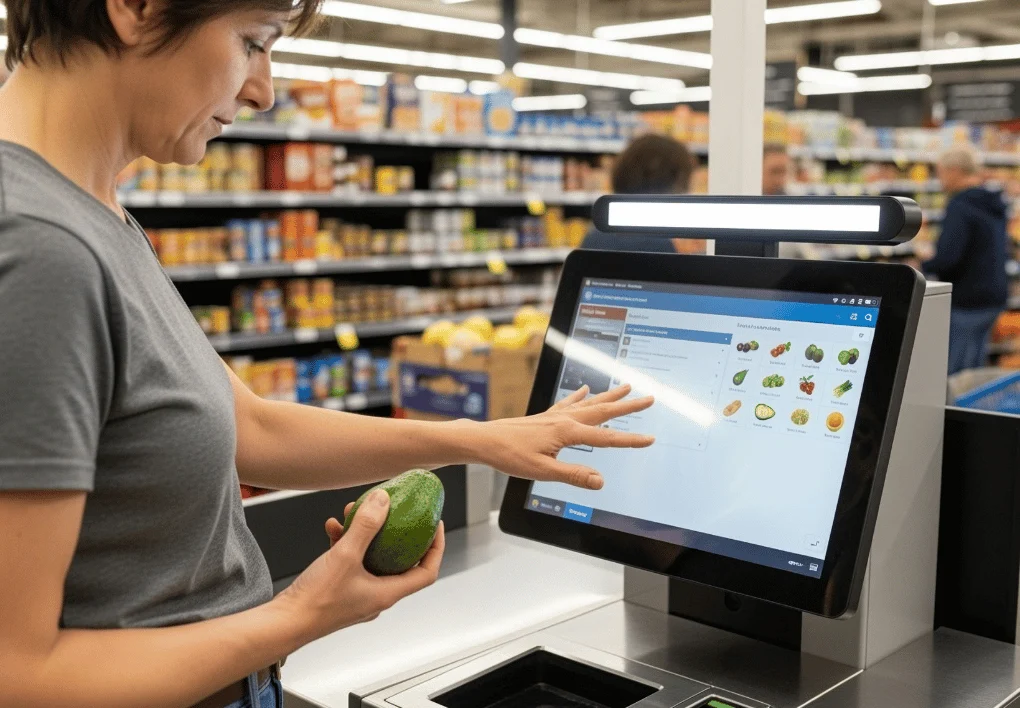
Self-checkout (SCO) has been part of retail for decades, but the future of self-checkout looks very different from its past. What began as a tool for faster transactions is rapidly evolving into something far more powerful. While its main role is still to enable independent checkout, it is increasingly acting as a live data node within a real-time intelligence layer connecting customer behaviour, operational performance and loss prevention into a single, unified system.
For most retailers, the question is no longer whether to deploy self-checkout. It’s how to evolve it into a system that works for customers, store teams and the business alike.
Self-checkout has scaled in deployment – but so have the challenges
Self-checkout is now the dominant transaction model for many grocery stores. On average, 54% of transactions in SCO-enabled stores now flow through self-service lanes and among the retailers we work with, that share is often higher.
But scale has exposed the model’s limitations. The Self-Checkout Loss Report 2026 from ECR Retail, points to a consistent pattern: stores running first-generation SCO tend to carry more loss than those without it on average around 33% higher. Loss also tends to climb after rollout, rising roughly 22% in the first year, and it keeps building as usage grows: the more transactions move through self-service, the more shrink increases.
This isn’t a failure of self-checkout. It’s a reflection of how the first generation was designed. Those early systems leaned on barcode scans, security scales and manual oversight built for a controlled, heavily guided checkout journey. Yet shopper behaviour, and retailers’ expectations of self-checkout, has moved on.
The root problem: visibility, not transactions
The biggest limitation of traditional SCO is simple: it doesn’t actually know what happened at the checkout.
A barcode scanner confirms that something was scanned. A scale confirms that something was placed in the bagging area. But neither confirms that the two are the same thing and that gap is exactly where loss occurs.
Missed scans are the most frequent source of loss, reported in 1% to 4.8% of transactions; product switching and barcode swaps are harder to catch; and walkaways, though rarer, carry the highest value per incident, averaging around €88 each.
At the same time, customer friction rises, queue abandonment, intervention overload for staff, and frustration that can tip into error or exploitation. For every 10,000 transactions, retailers can expect roughly 1,000 help calls. That’s the tipping point, where checkout convenience starts to cost more than it saves.
The rise of “intelligent intervention”
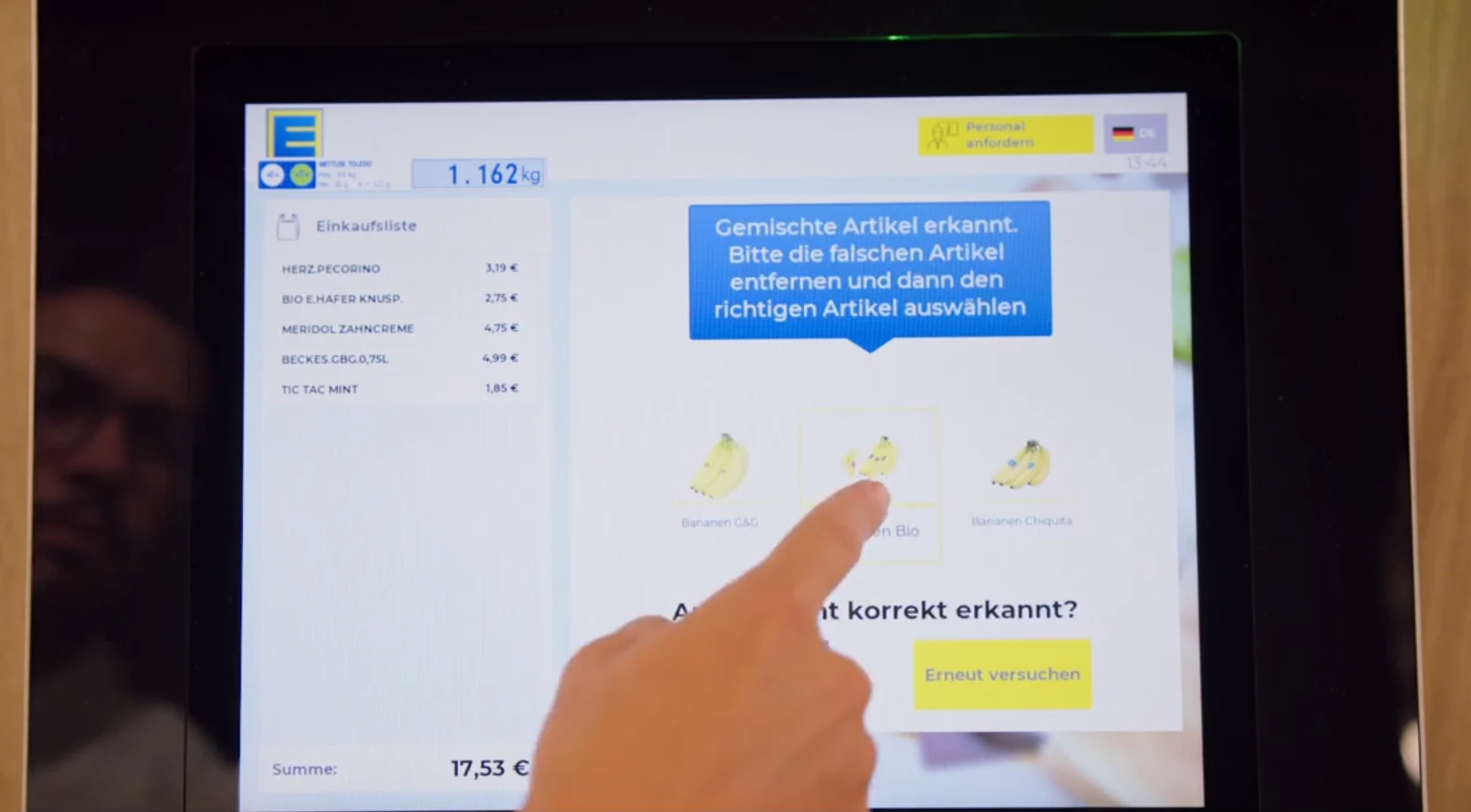
A key breakthrough in next-generation, AI-enabled self-checkouts is how problems get handled. Instead of reacting after loss has already happened, these systems detect anomalies in real time, offer the shopper a subtle prompt; a nudge on screen and give them the chance to put things right themselves.
This matters more than it might sound. We’ve found that shoppers self-correct in around 80% of cases when nudged – a pattern the ECR report echoes, with on-screen prompts driving self-correction in more than 80% of cases. That single shift changes the experience entirely: from disruption to guided correction, and from enforcement to assisted accuracy. It’s central to where self-checkout is heading.
Instead of reacting after loss occurs, systems now:
- Detect anomalies in real time
- Provide subtle prompts (“nudges”)
- Enable customers to self-correct
Real-time intelligence: turning every transaction into insight
The move to Vision AI doesn’t just catch loss; it brings visibility. Retailers can finally see what’s happening across every checkout, in real time, with each interaction becoming structured data not just what failed, but what led up to it. That reveals what older systems never could: which items are most often mis-scanned, where shoppers repeatedly stumble, and how behaviour trends emerge across stores and formats. Over time it builds a clear picture of how customers use self-checkout, where friction lives, and where it can be designed out. The self-checkout becomes far more than a control point.
The future is a connected store
The most important change is structural. Self-checkout is no longer a standalone system. Increasingly, retailers treat it as one part of a connected, store-wide intelligence platform where events in the aisles, on the shelves and at the checkout are linked, behaviour is followed from selection to payment, and loss is understood across the whole journey rather than at a single point. The checkout becomes a data node, not just a transaction point.
That shift is happening through retrofit, not rip-and-replace. The early vision of AI in retail was the “just walk out” store, but the reality has moved on. Retailers are prioritising modular deployments that work across existing store formats and deliver incremental upgrades with fast ROI. Fully autonomous stores still exist, but mostly in controlled environments. The bigger opportunity lies in enhancing what already runs.
Self-checkout benefits for store teams start with visibility
As self-checkout evolves, the advantage goes to systems that work with customers and colleagues rather than against them – smarter SCO lanes, connected data and real-time intelligence built around the people using them.
It all starts with one thing: visibility. A checkout needs to see what actually happened, not just what was scanned or weighed. Once it can do that, loss prevention stops being about catching problems after the fact. It becomes real-time helping shoppers get it right as they go, and freeing store teams to step in only where it counts.
- Our guide to self-checkout security walks through how vision AI works in practice.
- SeeChange’s AI self-checkout software shows what it looks like in a live store. And if you’re mapping where self-checkout goes next across your estate, we’re happy to talk it through.