Retail security vs shopper experience: is locking products up costing more than theft?
22nd August 2023
Why retailers are locking products up in cabinets and what it costs
Walk into many stores today and the deodorant is behind plexiglass, the razor blades are tagged and the cheese is in a locked cabinet. Faced with rising theft, retailers have reached for the most visible deterrent available: to lock it up. US retailers are expected to lose $49.8 billion to retail theft in 2026, there’s been a corresponding increase in ever more drastic measures to prevent shrink rising further: locked cabinets where shoppers must ask a member of staff to either open the cabinet and give them the product, or retrieve the item from the stock room, locking high value items in security cases, and tagging items with security and RFID tags.
But locking up merchandise stops some theft and some sales. In one survey of more than 5,000 shoppers, 27% said they’d switch retailer or abandon the purchase altogether rather than wait for a case to be unlocked which raises an uncomfortable question for loss prevention teams: is locking products up costing more than the theft it prevents?
It’s understandable that retailers are attempting new ways to crack down on the different types of retail shrink. However, many attempts to tackle shoplifting create higher levels of friction for their customers. How many times have you considered purchasing something with a security tag, only to change your mind when you see the queue at the checkout?
For customers who now need to find a store employee, and wait whilst tags are removed, this delay in their shopping is frustrating. New restrictions, imposed by retailers to reduce shrink, agitate many customers simply trying to complete their grocery shopping.
There will always be shrink in retail. Customer theft is only one part of the picture: in the last full breakdown published by the National Retail Federation, external theft shoplifting, organised crime and fraud combined made up around a third of shrink, with the rest coming from employee theft and administrative or process errors well before the shop floor. The overall goal should be to reduce shrink by an acceptable amount, whilst providing an environment that does not add excessive friction to the customer journey through the store.
Restricting access to products diminishes the shopping experience in other ways. In the rush to lock up, tag up and protect products, we’re at risk of forgetting that shopping is not just about picking up a product and buying it (ironically hard with all the new tags and locked cabinets). The time to dwell, to browse new products and drop them in the basket on impulse is not only important to the retailer in terms of additional sales, but for customers it’s the reason they are in store and not simply buying their usual products online.
Items such as toothbrushes, razor blades, cosmetics and batteries are some of the high-value items frequently stolen. But with fast online ordering now commonplace whether through marketplaces, grocers or direct-to-consumer retailers; customers are not forced to queue for these items or go without them. They can simply order online and have them delivered, sometimes even the same day.
When retail security drives shoppers to your competitor’s store
For more than one in four shoppers (27%), a locked case is enough to lose the sale entirely: they’ll abandon the purchase or take it to a competitor rather than wait. At the same time, store assistants face mounting pressure as they cope with irritated customers, while having to manage a growing number of items requiring security packaging for shelf replenishment, and unlocking them again during checkout. Consequently, customers find themselves waiting for other customers’ purchases to be unlocked, or waiting for a member of staff to become available to unlock their own.
The friction, longer queuing times and frustrations lead to an inevitable hit to impulse purchases – one of the key areas where retailers can drive increases in profits.
Locked cabinets and tags aren’t new but the scale of their impact on customer experience is. Take cheese or deodorant. For ordinary shoppers, seeing these everyday items locked in plexiglass or wrapped in security tags is a startling experience. Not simply because these are such commonplace items, but because extreme levels of security in store can make a store feel like an unwelcoming, even unsafe, place to shop.
Retailers have acted with speed to crack down on a shrink problem. Walgreens CEO Tim Wentworth admitted that locking commonly stolen products behind glass had backfired: “When you lock things up… you don’t sell as many of them,” he told analysts, saying the company had proven as much conclusively. The heavy security investment, he acknowledged, had done little to stem the losses – and he had no clear fix to offer. This is a sledgehammer approach to an unknown quantity – you can see the sales you lose far more clearly than the theft you prevent.
Shoppers will still buy these products just not always from you. When the in-store experience becomes more hassle than it’s worth, many simply go elsewhere. Heavy-handed security, meant to protect revenue, can end up handing it to the competition.
A better balance: cutting shrink without punishing shoppers
There is no one size fits all approach to reducing shrink in stores. It can be easy to lock away products to reduce theft but are there other ways to address shrink without diminishing the experience of visiting a store in person?
There will always be those with the intention to commit theft and fraud, but should every customer face higher prices, more friction, and poor customer experience because of them? It is possible to envision a different store, one where store assistants are focused on helping customers find the products they need, providing valuable insights about products, and not being the target of frustration as customers wait for items from a locked cabinet or the storeroom.
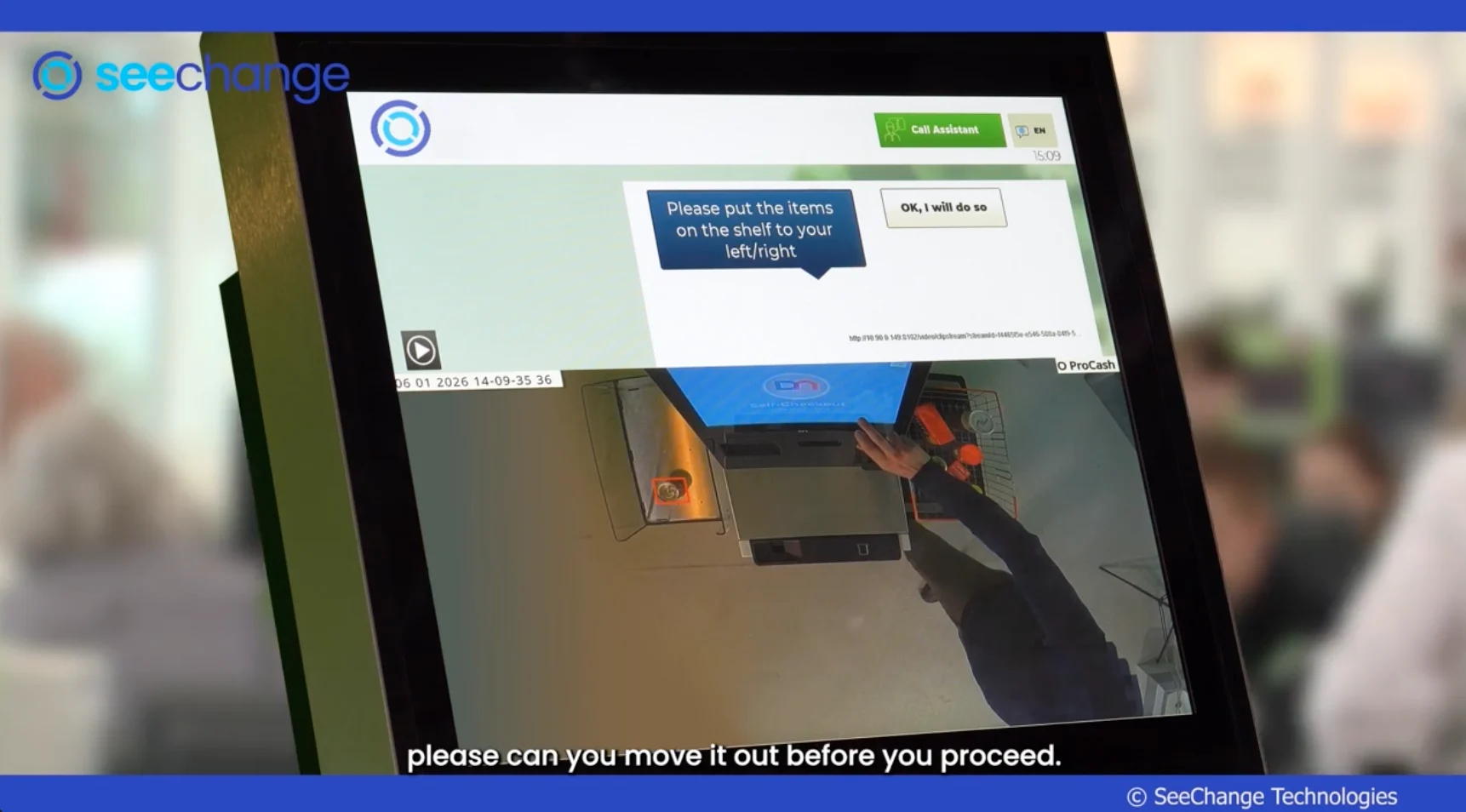
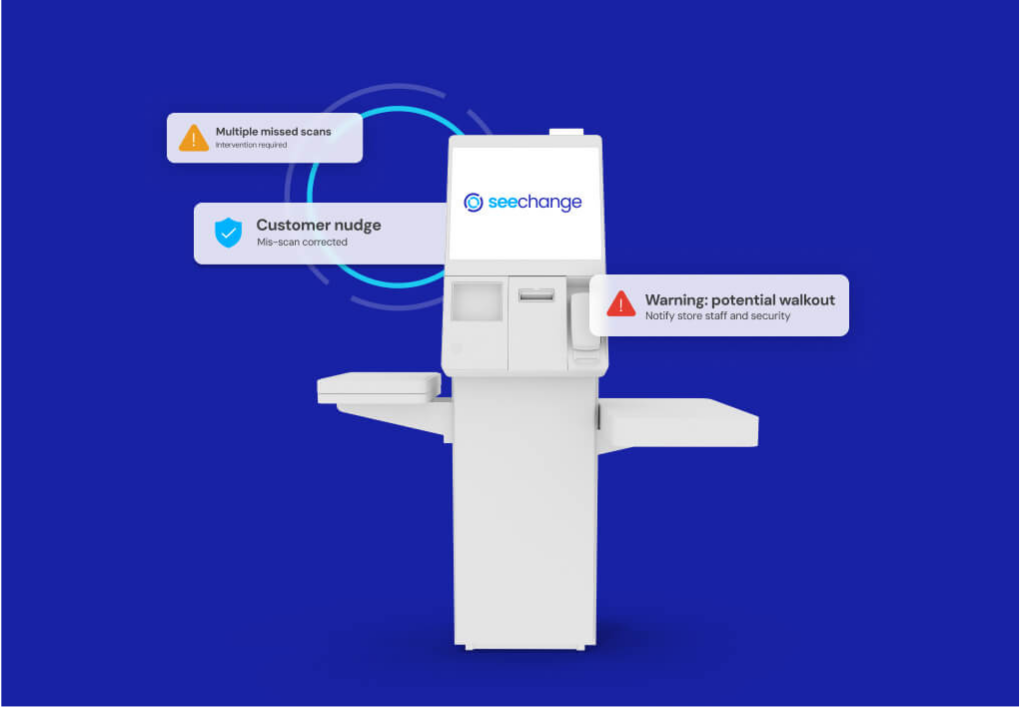
The reason locking up feels necessary is that traditional security can’t tell a thief from a customer, so it treats everyone as a suspect. Computer vision AI changes that. There’s another way to handle this. Rather than locking products away, behaviour-based detection picks up the actions that signal loss rather than identifying items by SKU or weight and flags them for staff as they happen so a genuine problem gets attention while everyone else gets on with their shop. The same approach runs from the shop floor to the self-checkout lane.
Proof it works
This isn’t theoretical. When Intermarché deployed computer vision AI at its self-checkouts, losses fell from 3% to below 1% and staff interventions were roughly halved with no locked cabinets and no added friction for shoppers. And around 80% of shoppers correct their own mistakes when the system gives them a gentle prompt. Protecting stock and protecting the experience turn out not to be opposites.
The smarter question isn’t “how do we lock more away?” but “how do we stop loss without driving customers out?” There’s no single answer; the right balance between loss prevention, staffing cost and customer experience depends on the store. Rich Lawler sets out three different approaches to reducing storewide shrink, and Self-Checkout Security 2.0 covers what the same thinking looks like at the checkout.