How Vision AI detects self-checkout theft: hidden items and barcode switching
17th January 2024
Hidden items and barcode switching are two of the less common but more deliberate forms of self-checkout theft, and both exploit the same blind spot in traditional security. Security scales and barcode scanners are the backbone of self-checkout, but a scale only confirms that something was placed in the bagging area and a scanner only confirms that a barcode was read. Neither can confirm whether those two things are the same product, or whether an item in a customer’s pocket was ever scanned at all.
Hidden item theft: concealment before payment
Hidden item events are relatively rare, but when they happen they leave no room for interpretation. A customer picks up an item and places it directly into a pocket or bag without scanning it. There is no scan error, no bagging-area confusion and no plausible innocent explanation. It is intentional.
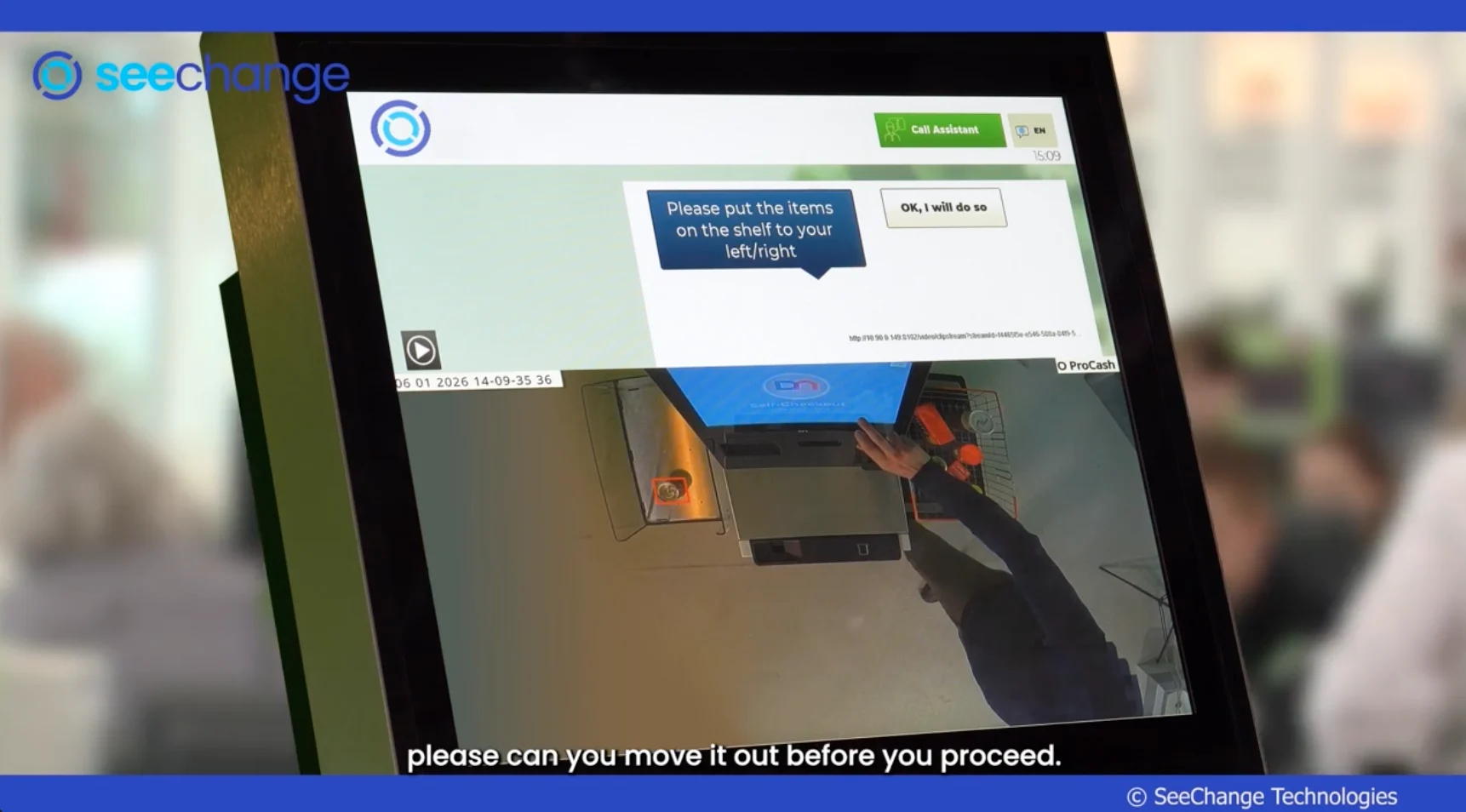
SeeChange handles this without making honest shoppers feel watched. It detects the hidden item in real time but holds the intervention until the customer presses “Finish and Pay”. If the item is still unscanned at that point, an alert is triggered with a timestamped video clip that shows the moment the item was concealed and highlights the item involved.
The same evidence can be sent in real time to security and store teams, with the retailer deciding how and when to act. Rather than relying on what a colleague thought they saw from across the floor, the team has the proof in hand before anyone attends the situation.
Barcode switching: swapping a scan for a cheaper product
Barcode switching happens when a shopper scans one item using the barcode from another, cheaper product. The transaction registers and continues, and nothing appears wrong: the scanner cannot verify whether the barcode that was scanned belongs to the product it was attached to. If the swap is for an item of similar weight, the scales will not flag it either. A premium steak scanned as a pack of own-brand mince, for example, has near-identical weight at a fraction of the price. The loss goes through as a completed sale.
The SeeChange AI self-checkout solution detects this by comparing the product the camera captures against the product the scanned barcode identifies. When the two do not match, the self-checkout is blocked, either during the transaction or at transaction-end, and staff are given a timestamped evidence clip and the confidence to act on it.
How vision AI detects what scanners and scales miss
Hidden items and barcode switching share the same structural weakness in first-generation self-checkout security: a system that only checks what the scanner registers cannot catch events designed to exploit exactly that limitation.
Vision AI works differently. A scanner registers whether a barcode went through. Vision AI analyses what actually happened at the checkout, so detection becomes possible in the cases where the scanner and scales have nothing to flag.
This is explained in the computer vision self-checkout section of our self-checkout security guide, covering how the technology works, what it detects that traditional systems cannot, and how that applies across different checkout configurations.
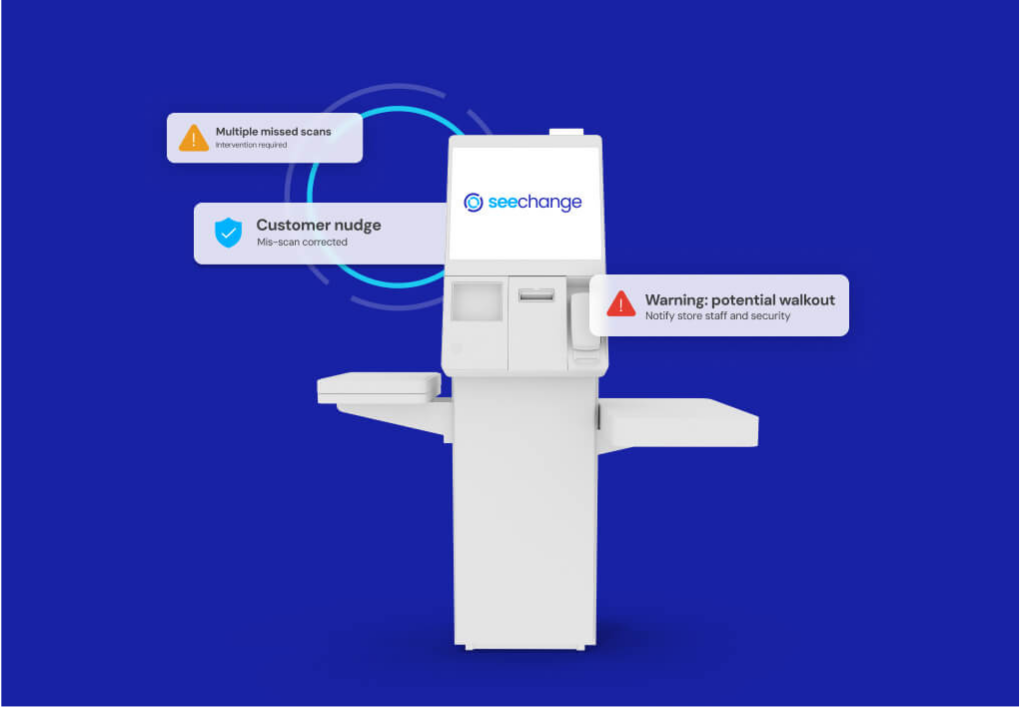
For the complete picture of how SeeChange protects the self-checkout lane across mis-scans, walkaways and transaction anomalies, with or without security scales, visit the AI self-checkout solution page or speak to the team.